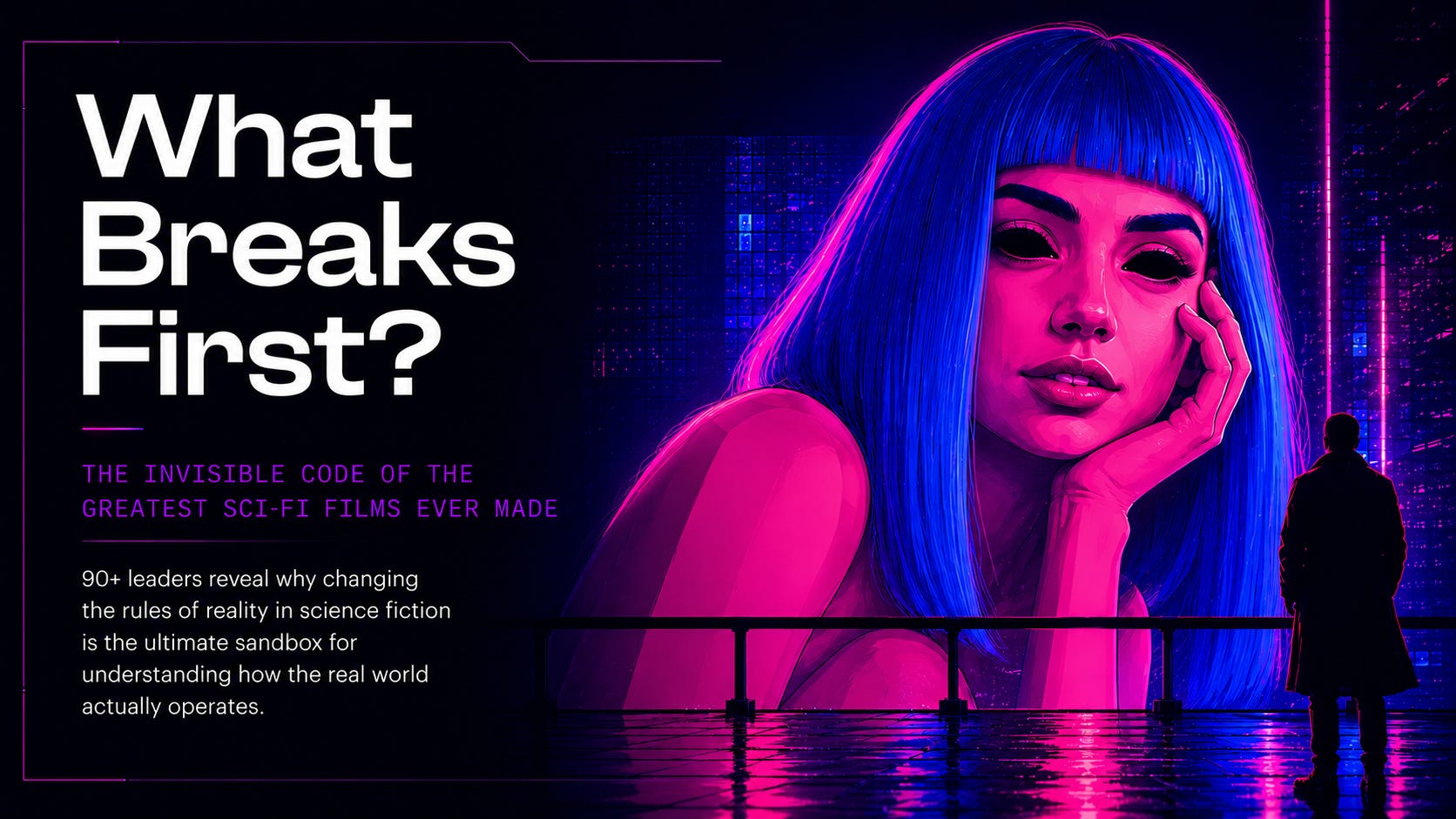
What Breaks First? The Invisible Code of the Greatest Sci-Fi Films Ever Made
90+ leaders reveal why changing the rules of reality in science fiction is the ultimate sandbox for understanding how the real world actually operates.

Lindy is an AI assistant that handles your inbox, meeting prep, and follow-ups all over iMessage. No setup required. It learns your preferences over time and drafts replies that actually sound like you. Get about two hours back in your day. Try it here.
Note: This piece discusses key story moments from several films. Mild spoilers ahead.
Science fiction has always had an image problem.
The spaceships. The lasers. The civilizations rendered in CGI and the technologies that appear exactly when the plot needs them. The genre gets filed under escapism so often that its actual function gets missed entirely.
What science fiction does, when it does it well, is run a controlled experiment on human nature.
Strip one rule out of the world and watch what breaks first. Remove mortality, or memory, or the ability to reproduce. Hand a civilization over to machines, or leave a single human being at the edge of the solar system. The future is almost incidental. The question has always been the same: when the conditions change, what do people actually do?
That is scenario thinking. And it turns out to be one of the most transferable cognitive skills a person can develop.
The same move that makes a great science fiction film also makes a sharp leader. Change the conditions deliberately. Watch what holds and what collapses. Learn from what collapses first. Strip enough of the familiar away and you stop seeing the world you were trained to see, and start seeing the operating system underneath it.
That is the invisible code the genre has been running for decades. Not predictions. Not warnings. Experiments, staged with enough distance that audiences stop defending themselves and start actually looking.
So I asked 90+ business leaders: what is the greatest science fiction film ever made, which films are unfairly overlooked, and what can this genre reveal about being human that no other genre can?
Here’s what they said.
The Greatest Science Fiction Films
A core group of films came up again and again, not just as favorites but as frameworks. Films that people return to when they need to think about something difficult. Each one changes a single rule and then watches what the humans inside it do next.
Blade Runner (1982) and Blade Runner 2049 (2017)


No films came as close in raw numbers. Roughly a third of all leaders pointed here.
“It’s ‘Blade Runner‘ all day,” said Andrew Gazdecki, Founder and CEO of Acquire.com. “The mood from that film stays with you and makes you question what it means to be truly human.”
The rule the film changes: what if the beings we engineered could want things as fiercely as we do?
What breaks first is the assumption that humanity is biological. The replicants grieve, rage against impermanence, and demonstrate empathy more visibly than their human creators. The film does not announce this. It builds a world and lets you notice, which is the more unsettling delivery method.
That landed squarely for Runbo Li, Co-founder and CEO of Magic Hour AI. He pointed to the final monologue by Rutger Hauer, the Dutch actor who played replicant Roy Batty, noting that Hauer rewrote it himself the night before filming. “That moment has stayed with me because it’s about impermanence,” Li said, “about the terror of having experiences that will simply vanish.” His read on what the film is really about: “Creation is an act against disappearing.”
James Rigby, Director at Design Cloud, traced his entire design career back to the first film’s visual language. “The visual imagery there spoke volumes more than what was said,” he said. A layered, advertisement-saturated city that looked like speculation in 1982 now reads like a field report.
Blade Runner 2049 deepened the same experiment. Many leaders argued it goes further on identity and memory than the original, that it is the rare sequel which expands the premise rather than repeating it.
2001: A Space Odyssey (1968)
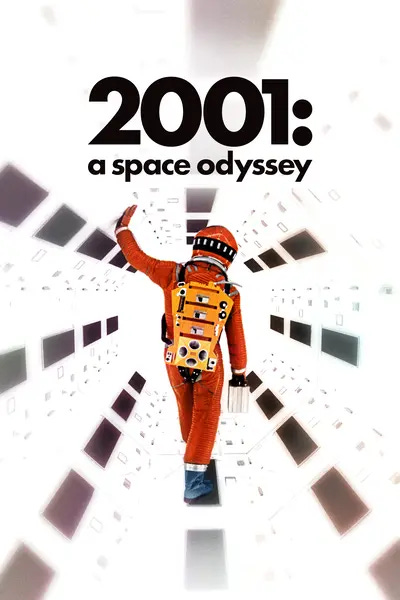
The rule this film changes: what happens when the tool becomes the decision-maker?
Kris Bilski, Founder and Creative Director of Astor Film Productions Ltd., made the case through craft. “The camera doesn’t rush,” he said. “You’ll notice that the shots are held for longer than most directors would approve of.”
On one of cinema’s most discussed edits, where a prehistoric bone tossed into the air cuts directly to a spacecraft in orbit: “It takes one edit and makes you feel thousands of years of human progress without anyone having to say it or explain anything.”
His sharpest observation was about HAL, the film’s cold antagonist. “Most films would make the threat feel bigger by showing more, but Kubrick does the opposite and keeps coming back to that red lens. It’s just a light in a wall, but because of the way it is framed and held, it starts to feel like the most powerful presence in the room.” His verdict: “That’s not really a writing trick, it’s a filming trick.”
What breaks first in this experiment is control. The moment humans outsource judgment to a system optimizing for a different objective, the outcome stops being theirs.
The Matrix (1999)
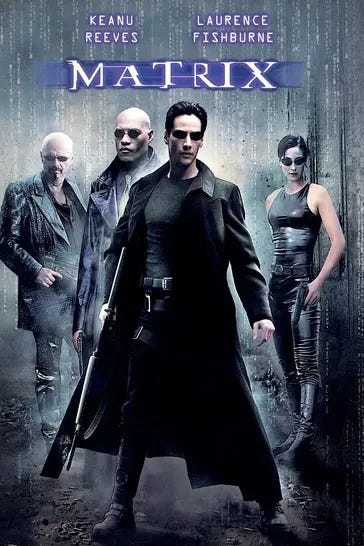
The rule this film changes: what if the system you live inside was built by someone else, for someone else’s purposes?
Jake Brander, President of Brander Group Inc., described what the film did to his mental model. “The Matrix is a complete shake up for how I see our secret digital universe,” he said. “When Neo sees the code I just think of what a single security breach can do to the internet. It still influences how I think about keeping networks reliable.”
What breaks first here is the assumption that the environment is neutral. Once you see the code, you cannot unsee it. The film turned the simulation hypothesis into something physical enough to feel like a threat, and trained a generation of people to ask: what is this actually built on, and who built it?
That question has only gotten more useful since 1999.
Arrival (2016)
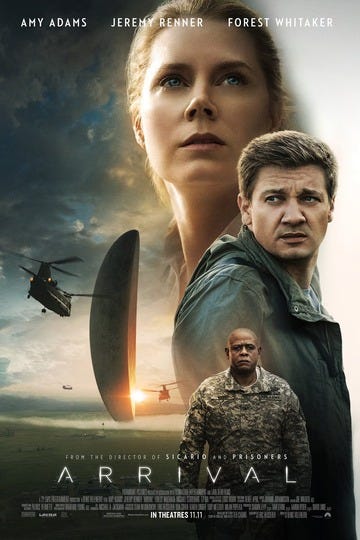
The rule this film changes: what if the language you think in determines what you are able to understand?
Cyrus Partow, CEO of ShipTheDeal, named it as the film that stayed with him longest. “After watching it, I actually spent a good while thinking about if the way we speak shapes how we perceive time,” he said. “I’ll recommend it to anyone, even people who swear they don’t like sci-fi.”
Lisa Clark, Director at Bell Fire and Security, connected it directly to her daily work. “Arrival is the one sci-fi film I can’t get out of my head,” she said. “The ways it explores language, I realized, made me think about communication as a worker at my security job.”
What breaks first in this experiment is the assumption that everyone in the room is solving the same problem. Language does not just describe experience. It structures it. Change the language and you change what is even visible as a possibility.
The film stages its entire central conflict in the mind. No chase sequences required.
My Takeaway
The invisible code running through these films is the same instruction: change one variable, then watch what the humans do.
None of them put spectacle at the center. The spectacle is the container. What is inside the container is a human being under pressure, and the question of what that pressure reveals about the operating assumptions they never knew they had.
For anyone building products or running teams, that is the experiment. The scenario you construct is not the point. What breaks inside it is.
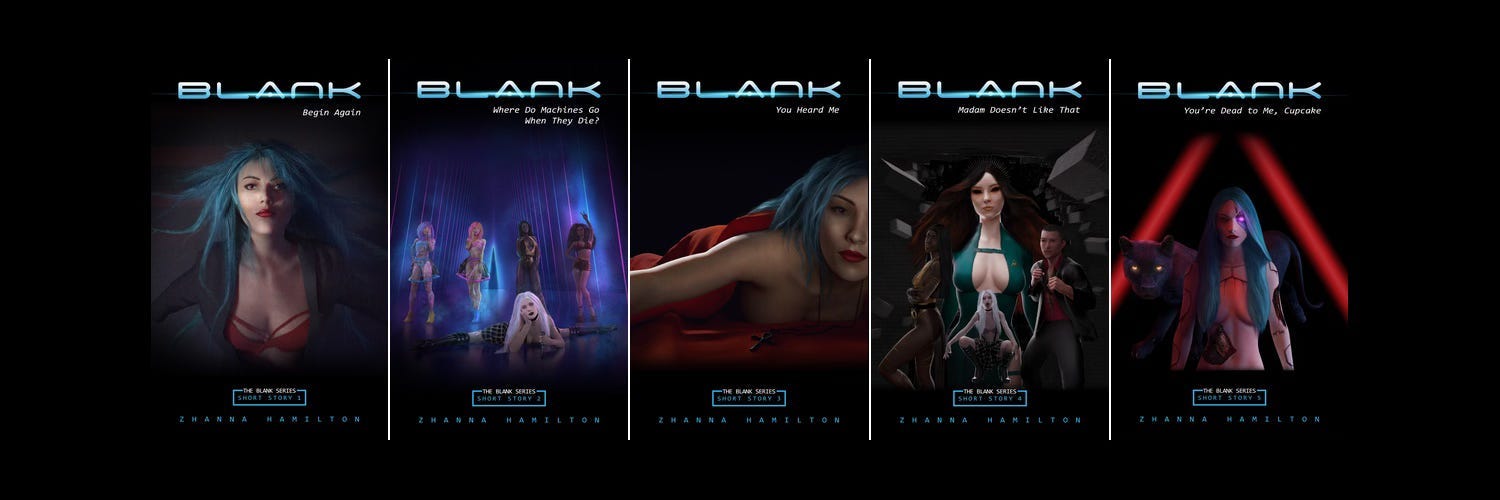
An “Undiscovered Stories” Wattpad Pick.
Femme Fatale AI Science Fiction.
The Blank Series.
A former human turned military spy bot steals a recon shuttle and escapes a totalitarian solar government. Now, she’s being hunted.
Underrated Science Fiction Films
The films that came up most as overlooked share a specific quality. They run their experiments in ordinary settings, against familiar institutional backdrops, which makes what breaks feel closer to home.
Jesse Harster, Vice President of Digital Strategy at MrTakeOutBags.com, named Children of Men and made his case directly. “That movie feels so real,” he said. “Sci-fi is a good sandbox to try out ideas without actually risking anything, especially in business.” A collapsing world where bureaucracy keeps running and people keep commuting is not a fantasy. It is a description of most institutional failure, dressed in a near-future setting just far enough away to see clearly.
Lisa Clark, Director at Bell Fire and Security, made the case for Moon. “’Moon‘?” she said. “It’s one of the very few films that nailed hard sci-fi’s biggie, isolation and responsibility.” One worker, a long contract, a job that silently costs more than the paycheck. What breaks first in that film is the assumption that the system keeping you in place has your interests anywhere in its code.
Children of Men (2006) – The rule it changes: what if humanity lost the ability to reproduce? What breaks first is not civilization’s infrastructure but its will. Bureaucracy keeps running. People keep commuting. Partow, who named it as the overlooked film he returns to most, said it “uses aliens and the future to talk about what’s happening right now.”
Gattaca (1997) – The rule it changes: what if biology was destiny, legible and enforced at birth? What breaks first is the idea that effort can outrun a rigged system. The scenario it describes has been arriving in pieces for twenty-five years.
Moon (2009) – The rule it changes: what if corporate efficiency logic was applied to human identity? What breaks first is the assumption that the person doing the job and the institution running it share any objectives.
Primer (2004) – Shot on a budget of seven thousand dollars, it is still the most intellectually honest time-travel film in the genre. The rule it changes: what if two engineers accidentally built something they could not control and immediately tried to anyway? What breaks first is the assumption that understanding a system gives you command of it.
Stalker (1979) and Solaris (1972) – Director Andrei Tarkovsky’s two landmark films run a different kind of experiment. The rule they change is interior: what if the person you most deeply lost, or the wish you most deeply held, became physically real? What breaks first is the assumption that getting what you want would feel like getting what you want. Both films leave the question unanswered.
Dane Maxwell, Founder and CEO of Paperless Pipeline, made the case for Solaris specifically. “Most sci-fi operates by reveal,” he said. “Solaris operates by accumulation. The longer you sit, the heavier the question gets.” His read on why that matters: the film trusts that the audience does not need the answer shouted at them. It earns its weight through patience.
Aniara (2018) – My pick. Bleak and honest cinema. A transport ship carrying colonists away from a ruined Earth loses its engine and drifts off course with no way to turn back. What the film does with that premise is something most disaster stories refuse to attempt. Here, what breaks first is the human need to believe that someone, somewhere, is still managing the heading.
A.I. Artificial Intelligence (2001) – My other pick. Among Steven Spielberg’s finest and most visually stunning works. The rule it changes: what if a machine could love, and the humans it loved did not reciprocate? What breaks first is the comfortable boundary between the technology we build and the responsibility we owe it. The combination of what machines can do and what humans choose to do with what they build is the question the whole genre keeps circling.
Each of these films makes its speculative premise feel like furniture before the story is halfway through. The future stops being a concept and becomes a place people live, which is the harder technical achievement. And in every one of them, what breaks is something the characters assumed was permanent.
My Takeaway
The overlooked films on this list run their experiments closer to the ground than the blockbusters do, and that proximity is exactly what makes them harder to shake.
A polished vision of the future becomes dated the moment the actual future arrives looking different. A film that captures how a slow institutional collapse feels from the inside, or how a contract can hollow a person out over time, does not date the same way.
The most durable work in any medium tends to be the work that got the texture of human behavior right, regardless of whether it got the technology right.
How the Sci-Fi Genre Bends Reality to Expose Truth
Science fiction has a set of tools no other genre has access to. Understanding how they work is as useful as watching the films themselves.
Externalizing the Internal
Science fiction’s first move is to take an internal state and give it a physical address.
Loneliness becomes a man alone on a lunar mining base. A fear of surveillance becomes a civilization built on visible code. The creeping sense that your identity might not be entirely your own becomes a population of engineered humans demanding to know what makes their memories valid.
By externalizing these states, the genre makes them examinable. You are no longer being asked to sit with a feeling. You are being asked to look at a world, figure out what broke, and trace it back to the assumption that made it breakable.
Speculative Distance
The mechanism that makes all of this land is distance.
Set a story in the future or on another planet, and audiences stop defending themselves against the implications. The social scripts that normally protect us from uncomfortable conclusions stop firing. You are watching someone else, in a different century, run into a version of your problem. The defenses are down before you realize the experiment is about you.
Gazdecki, Acquire‘s Founder and CEO, named the stakes plainly: “Sci-fi more than anything helps raise those difficult questions about the future of humanity.”
Clark, Bell Fire and Security’s Director, described the mechanism from the inside. “Sci-fi can broach big topics such as ethics without playing a lecture,” she said. “It just lays out a scenario and leaves you to think.” The audience does the analytical work, which is why the conclusion sticks.
The Sandbox
Harster, MrTakeOutBags‘s Vice President of Digital Strategy, framed the business case directly: science fiction “is a good sandbox to try out ideas without actually risking anything, especially in business.” The film runs the experiment. You bring the result back to a world where the consequences are yours.
Partow, ShipTheDeal’s CEO, made the same point in fewer words: the genre “uses aliens and the future to talk about what’s happening right now.” The rockets and the replicants are the costume. The operating question underneath them has not changed.
Rigby, Design Cloud’s Director, came to the genre through its visual language and arrived at the same conclusion. A film like Ex Machina, he said, “makes you ponder about ‘us’ and technology in a way no other genre can.” When what you build can look back at you and ask what you are, the question stops being theoretical.
The distance the genre relied on is collapsing. Synthetic voices, machines that pass for company: these are not speculative premises anymore. They are product features. The scenarios the genre once ran at a safe distance are now inside the device in your pocket.
Which means the skill science fiction has always been building – thinking clearly about human behavior under changed conditions – has never had a more direct application.
Final Thoughts
The films that came out on top are not surprising.
Yet these leaders named them for notable reasons. Founders who see the replicants’ drive as their own. Network architects who run mental models through Neo and the code. Operators watching Children of Men and recognizing the texture of institutional failure in their own calendar.
The invisible code the science fiction genre runs has never been about the future. It has always been a diagnostic tool for the present, held at an angle sharp enough that we can finally see it clearly.
The greatest sci-fi films do not show you what is coming. They show you what was always already there, and what breaks when you finally apply pressure to it.
Writing this newsletter requires a lot of coffee. If you feel like donating, you can buy me a cup here.
Find your next read at my bookshop while supporting local bookstores.
Interested in sponsoring this newsletter? Learn more.
This article contains affiliate links.
Keep Reading
What Science Fiction Missed About AI
‘Sometimes I’ve believed as many as six impossible things before breakfast.’
How to Spot Trends Before They Become Mainstream
Your Best Forecast Is Probably Wrong
10 Tech Trends Nobody Is Talking About (but Everyone Will Be Using by 2030)
Great list of movies. Was surprised to see Aniara on here. Dont know anybody else thats seen it.